Research
My research uses computational modeling and behavioral experiments to understand how people reason about other minds. I'm especially interested in the representations and computations underlying theory of mind — how we infer what others are thinking, feeling, and experiencing — and what happens when they are deployed in high-stakes real-world contexts like clinical care.
1. Theory of mind & cognitive processes
How do people infer the unobservable contents of other minds — what others are thinking, remembering, or experiencing? I build computational cognitive models of these inferences and test them behaviorally.
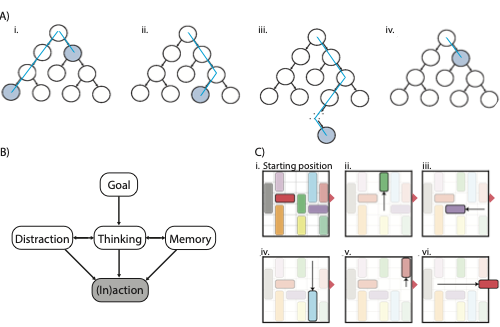
R&R at Psychological Review · preprint
Earlier work in this series
· Behavioral and Brain Sciences 2024 link
2. ToM in communication
Theory of mind is not just for passive observation. It shapes how we interact, communicate, and even deceive. This line examines how people strategically deploy mental-state reasoning during communication and deception.
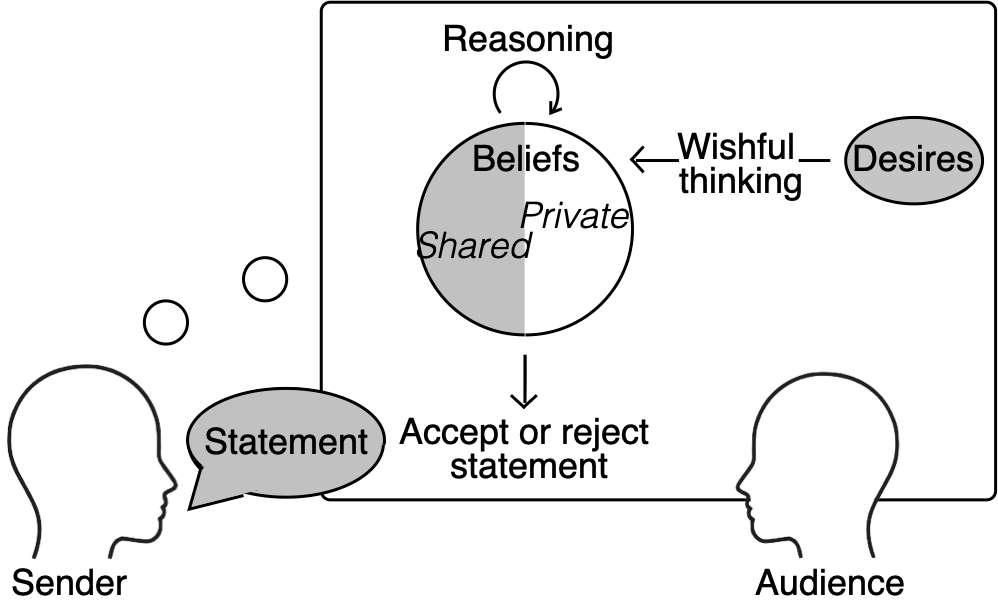
(* equal contribution) in prep
Earlier work in this series
3. ToM in the wild: Reasoning about pain, bodies & medicine
Attributing pain to someone else relies on both our theory of mind and our intuitive theory of how pain works. These intuitive theories of mind and body have direct consequences for how pain and stigmatized conditions are believed, dismissed, and treated in healthcare interactions.
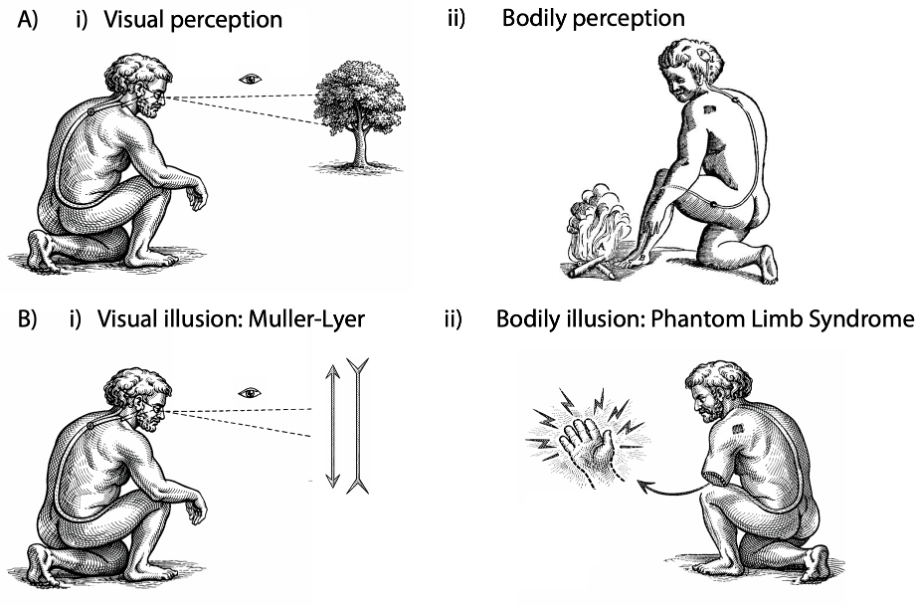
under review · preprint · supplement · interactive demo
Earlier work in this series
-
Toward a formalization of human intuitive theories of bodily pain (short version)
preprint
· Behavioral and Brain Sciences · commentary on Bai et al. in press · preprint
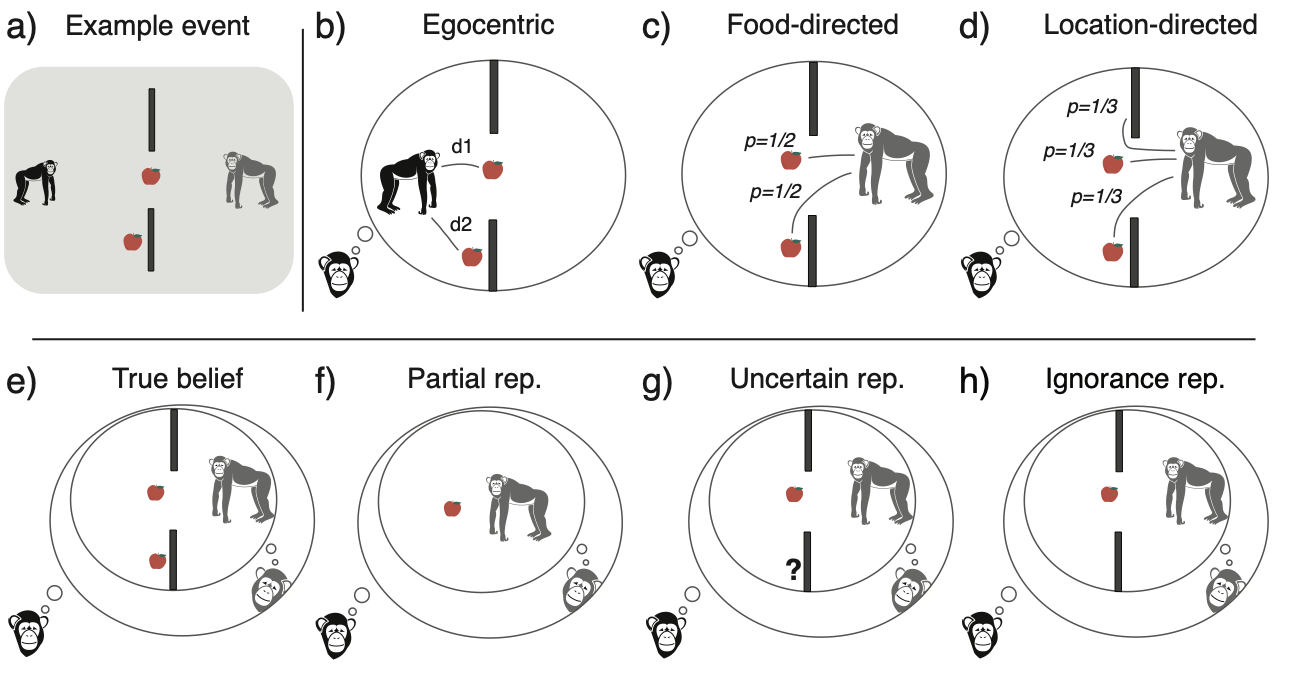
4. Comparative cognition
What representations does a system need for intelligent behavior?
A parallel thread investigates representations in other kinds of cognitive systems — from non-human primates to artificial systems — in order to better understand the representations that support intelligent behavior writ large.
In evolutionary simulations
· Cognitive Science 2022 pdf